

MEDIUM & MESSAGE BOTH BEGIN WITH "ME™"
IDENTITY BRANDS™, PERFORMATIVE TASTE CONTENT™ AND "A NEW ERA FOR PITCHFORK™"

“WE HAVE A SAYING HERE AT THE OFFICE: “6.8, GOOD, NOT GREAT..” - PITCHFORK™
HELLO MY FRIEND,
IT IS NOW TWO THOUSAND AND TWENTY SIX OR SO…
I HOPE THIS YEAR GREETED YOU WARMLY WHEN IT ARRIVED…
….AS I TYPE THIS OUT IT’S 21 DEGREES BELOW THE FREEZING MARK UP HERE IN THE ONLY REAL (BUT NECESSARILY NOT BEST) CITY IN THE 51ST STATE™…
…THAT’S IN CELSIUS - BUT THAT DOESN’T MAKE IT THAT MUCH BETTER…
I WOULD LIKE TO START OFF BY SAYING THANK YOU TO EVERYONE WHO HAS RECENTLY SUBSCRIBED TO THIS SUBSTACK™, AND I’D LIKE TO SEND AN EXTRA HEAVY DUTY THANK-YOU-AND-BLESS-YOUR-BEAUTIFUL-SOUL TO THOSE OF YOU WHO HAVE GRACIOUSLY BOUGHT A PAID SUBSCRIPTION. YOU ALL KEEP ME INSPIRED AND ALERT. YOUR SUPPORT MEANS MORE THAN YOU COULD EVER POSSIBLY KNOW.
IF YOU AREN’T SUBSCRIBED YET, SUBSCRIBE RIGHT NOW.
THIS SUBSTACK WILL CONTINUE TO BE FREE BUT THE OPTION FOR A PAID SUBSCRIPTION WILL ALWAYS REMAIN OPEN.
NOT ONLY DOES MONEY MOTIVATE THIS OPERATION, IT QUITE LITERALLY ALSO PUTS GAS IN THE TANK.
THIS THING HAS A V8 ENGINE.
WHEN I STARTED PUBLISHING MY WRITING ON THIS PLATFORM™, I DIDN’T REALLY HAVE MUCH A PLAN.
SINCE THEN, A VOICE AND A FORM HAVE EMERGED.
THESE EXCURSIONS KEEP GETTING LONGER…I SIT DOWN AND TRY TO DRILL INTO SOMETHING AND FIND MYSELF SIMULTANEOUSLY SPIRALLING FURTHER OUTWARDS AND UPWARDS INTO FARAWAY GALAXIES THE DEEPER I DIG DOWN…
ANGLES INVERT THEMSELVES, A RECONSTITUTION OF FORMS INTO NEW SHAPES THAT MY RULERS CANNOT MEASURE…
I FIND MYSELF ENGAGING WITH STRANGE TEXTURES, MATERIALS SEEMINGLY NOT KNOWN TO HUMANKIND…
WE’LL GET BACK TO THE WEIRDNESS SOON.
THE NEXT TIME YOU SEE ME, WE MIGHT END UP ALONE TOGETHER IN A CELEBRITY WAX MUSEUM DURING A POWER OUTAGE OR STARING AT A MOUNTAIN IN TAOS THAT HOUSES CRYSTAL SKULLS AND EMANATES A SUBLIMINAL HUM THAT HAS DRIVEN GENERATIONS OF UNCLE SAM™’S EMPLOYEES INSANE…
BUT IN THE MEANTIME, LET’S TALK ABOUT MIRRORS…
A COLLECTION OF VINTAGE DESIGNER SUITS COVERING A BODY THAT SOMETIMES OPERATES AN OLD CADILLAC™
Apparently, as a young child, I would watch myself cry in the mirror.
lol…
I sometimes think about this and wonder what it was that felt so alluring about seeing myself cry.
Was I performing sadness for myself?
Was I curious about how other people might see me in a vulnerable state?
Did it have something to do with narcissism?
Was I rehearsing? Had hours of watching people act on television trained me to think of emotion as something to be performed and witnessed through physical gesture?
I’ve always felt that things look slightly off in a mirror, a strange inversion of reality that never quite matches the world it claims to reflect back as a perfect simulacrum.
I can see a warped version of myself right now, my reflection bent along the margins of this screen as I type this sentence. I then catch myself in a state of over-awareness, beginning to worry about how these words might portray me, the entity known to you as Tony Price™.
When he sits down to write, Tony Price™ usually starts by writing to himself, trying to find language capable of conveying the strange textures, discrepancies, and atmospheres that define, reflect, and pervade his life.
His biggest concerns when writing oscillate between worrying that he might not be “qualified” to speak about certain things, or that he lacks the technical dexterity required to convince a certain type of reader of his point, and the fear that he may come across as pretentious, pompous, glib, facetious, or contrarian to another type of theoretical reader.
Put more succinctly, he’s worried that he might come off sounding too dumb for the smart people and too smart for the dumb people. Is he a dumb smart guy, or a smart dumb guy?
Well, truth be told, he’s probably both and neither at the same time.
My real name isn’t even Tony Price. Tony Price™ is an entity created and propped up as a stand-in for a Canadian man of European and Polynesian descent named Anthony who utilizes the Tony Price™ Identity Brand™ as a means of operating, working, marketing, and promoting his work in the cultural and communicative sectors of contemporary society. Tony Price™ is a set of ideas, a stack of philosophies, a tone of voice, a selection of vintage designer suits and leather jackets covering a body that is often operating an old Cadillac™, a constellation of curated aesthetics, and the name given to the author of a range of concepts manufactured into consumer products and digital memorabilia in the form of Albums™, Essays™, Instagram Posts™, Radio Shows™, etc.
I was a teenager when I chose the name Tony Price™ for the avatar through which I would exist on the internet as a musician. I was inspired by the names of DJs I listened to on the radio as a kid — DJ Tony Monaco on 103.5, DJ Tony Humphries on Kiss FM NYC, and DJ Tarzan Dan from CHUM-FM — and thought it would be appropriately garish and obnoxious to choose something similar for myself.
I’ve been online for most of my life. My father had a Macintosh computer connected to the internet as early as 1997. I have a distinct memory of him being stuck on hold with the people at Netscape Navigator™ one night after installing the then just-released Mac OS 8 operating system - the program could not yet run on the new OS.
Getting lost inside the liminal topographies and prosthetic geographies of the early web had a profound effect on me. The experience of the internet felt very much like entering another world, jacking in to an interzone of hallucinatory cartographies that required crossing a threshold into somewhere else, somewhere that was definitively not “here.”
The internet changed for me when it began to require that I show myself to it. I have never been comfortable portraying myself online. It wasn’t until very recently that I started to feel okay about posting photos of myself on social media to help promote my music. I have never maintained a personal social media account tied to my actual name, identity, or private life, untethered from my work as a musician or the persona I have fashioned to stand in for me since the brief period I spent on Facebook MKI in high school.
Around this time, the internet began to feel very different. No longer a place one visited, it seemed to have annexed all territory and embarked on a full-scale renovation of this side of reality, abandoning its alien geometries in favour of the familiar textures of capital. It was no longer somewhere to go, but an eternity of enclosures, a system in which there no longer seemed to be an outside.
And now we are here.
Where?
You know where.
The only place you can now go…
“A NEW ERA FOR PITCHFORK™”
Pitchfork™ recently announced that after 30 years, it will begin paywalling its entire archive of album reviews. Access beyond four reviews per month will now require a $5 subscription, which will also be necessary to view any new reviews once the “casual reader” limit is reached. Alongside this enclosure, the site is introducing a second change: subscribers will now be able to score albums themselves, comment on reviews, and “be in dialogue with” Pitchfork™’s critics.
The announcement, published January 20th, 2026, in an article titled A New Era For Pitchfork: Introducing Reader Scores and Commenting by Pitchfork™’s head of editorial content, Mano Sundaresan, spends its opening paragraphs carefully framing the shift as a democratic evolution in music criticism. “We still believe in authority,” he writes, “and in the primacy of Pitchfork™’s taste — but we want to publish our readers’ taste and opinions too.” Only in the fourth paragraph does the material change finally appear: in order to read unlimited reviews, see reader scores, comment, or view the comments of others, “you’ll have to smash subscribe.” Bury the lede much, my friend?
While the News, Features, and Columns sections of the site will remain free, the practical effect of this announcement is simple: Pitchfork’s core product — its album reviews and its institutional memory, is now locked behind a paywall.
For decades, Pitchfork’s album reviews functioned as an instrument of cultural authority, a role that began to collapse after its acquisition by Condé Nast™ in 2015 and its subsequent turn under editor Puja Patel toward a version of Poptimism™ that traded judgment for moral signalling and steadily diluted whatever authority remained.

Until now, they largely functioned behind a veil of mystique, a closed door. Their ratings system was deliberately opaque, with no published criteria and no clear explanation for what, in practice, separated a 6.8 from a 7.2.(they have now published their ratings guide for anyone who cares). There was also no obvious pathway to their writers. For aspiring musicians releasing music in the 2000s and 2010s, the most you could hope for was a Pitchfork™ review, on the belief that its critical authority and tastemaking machinery might be able to catapult you over the wall of obscurity into the fertile territories of the Indie Economy™.
Pitchfork™ has been a major part of my life since I first encountered their 2004 100 Best Albums of the 1970s list in my early teens. It was through this list that I discovered Bowie’s Berlin Trilogy, On the Corner, Histoire de Melody Nelson, The Payback, Maggot Brain, Faust’s IV, and Pink Flag — records that profoundly altered my sense of self and continue to shape the course of my life. What distinguished this list from the Rolling Stone™ canon, which endlessly recycled the same exhausted narratives about the past, was that it offered a glimpse of an alternative history: a version of the 1970s organized not around mass consensus but around difficulty, rupture, and aesthetic risk.
Like many of my generation, Pitchfork acted as a compass for what was considered “cool” in my teen years. They turned me onto early records by artists that would become international sensations, almost convinced me that albums I knew were masterpieces were missteps and more frequently than not, swindled me into listening to some utter fucking rubbish.
They have also reviewed many records I have been involved with, both releases under my own name and albums by bands I was part of, as well as records I worked on as a producer or mix engineer. Some received respectable ratings, one record I produced was subjected to an infamously hostile review that read less like criticism than a moralizing undergraduate polemic and a few were praised as instant classics that were stamped with the elusive “Best New Music™” designation.
A multitude of factors can be pointed to as causes for Pitchfork™’s step into a so-called “New Era™”: narrowing margins in prestige publishing; the collapse of advertiser-funded revenue structures; the general erosion of critical authority and the weakening of expert legitimacy; the consolidation of legacy media under Condé Nast™; the platformization of cultural discovery through Google™, Spotify™, TikTok™, and YouTube™; the growing dominance of quick-hit video content over evaluative criticism; the exhaustion of gatekeeping as a viable institutional role; and the increasing necessity of participation as a mechanism of retention, monetization, and risk management. Ultimately, something like this was a long time coming.
This move truly marks the end of…something.
Regardless of what you thought (or pretended not to think) about Pitchfork™ as an institution over the last few decades, it had largely become the music paper of record, and it undeniably defined the contours of popular music discourse for a generation. Pitchfork™’s power came not simply from its readership, but from its position as an intermediary: a gatekeeping institution capable of translating obscure records into careers, and private taste into public value. Its authority rested on asymmetry, distance, and the refusal of dialogue. Judgment moved in one direction -> the simply audience received it.
Handing their power and authority off to their audience might seem illogical, misinformed, or even self-destructive but what Pitchfork™ is actually doing is totally consistent with a broader cultural shift.
They are becoming a mirror.
In place of mediation, they are now offering Participation™. Pitchfork™ will no longer stand apart from its audience in order to shape taste, but return the audience to itself, delivering and displaying its own preferences, reactions, and identities back to them as content.
Let’s call it Performative Taste Content™.
You know exactly what it is.

ENTER THE MIRROR
Performative Taste Content™ is exactly that: social media content designed to promote a user’s Identity Brand™ through the performative display of Taste™. The most visible examples in my own feed today have been the Criterion Closet™ videos, Pitchfork™’s Perfect 10 series, Toronto’s Finest™’s Best Of Toronto series and the Perfectly Imperfect™ newsletter. I encounter these things daily, often multiple times a day. You have almost certainly engaged with some of them yourself today too.
Have you imagined what you would choose in the Closet™, or what your Perfect 10™ album might be?
Have you watched musicians speak in carefully calibrated TikTok cadences about their prized vintage gear or their favourite DJ mixes?
What is your Letterboxd™ Top Four™?
These formats do not exist to evaluate art in any capacity. They are containers for promotional content.
They exist to stage Identity™.
In each case, taste is not argued but displayed, not defended but performed. What matters is not any form of judgment itself, but the legibility of the Self™ who makes it.
Performative Taste Content™ represents a modal shift in social media marketing away from experience documentation, vlogging or lifestyle blogging toward aesthetic self-curation, the performance of discernment as identity.
There are many reasons why this shift has occurred, but its underlying logic is simple: we are advancing deeper into a phase of what might best be called Identity Capitalism™, in which cultural preference functions less as a way of relating to works and more as a way of managing how one appears.
As a mutation of contemporary capitalism, Identity Capitalism™ names a dominant logic within the cultural and communicative sectors. It is the mode of subject formation that takes place within the infrastructures of platform capitalism. Its defining features include the centrality of platforms and platform visibility as mechanisms of value extraction, and the increasing dependence of an individual’s capacity to function socially and economically on their ability to curate, develop, and maintain a sellable outward appearance - an Identity Brand™ - on these platforms.
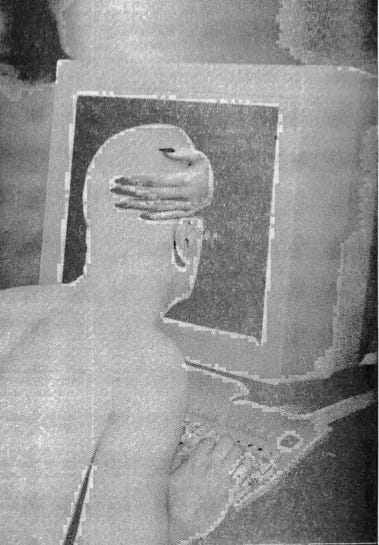
An Identity Brand™ is a composite construct of images, stances, affiliations, and signals assembled to render oneself legible as a marketable entity within the digital media ecosystem. It is performance that is platform-mediated, indexed, circulated and rendered legible as data.
WHAT DO YOU DO?
WHO DO YOU KNOW?
WHAT DO YOU STAND FOR?
LINK IN BIO.
An Identity Brand™ precedes you. Under the conditions of platform capitalism, where interaction is pre-structured by systems of visibility, ranking and circulation, the digital avatars we construct to represent ourselves increasingly function as our first point of contact in basic social interactions - from job searches and community formation to friendship and dating.
Within Identity Capitalism™, social and economic incentives are reorganised around visibility and legibility on platforms. Self-expression becomes compulsory, not as freedom, but as a condition of participation.
PARTICIPATION = BEING SORTABLE.
PARTICIPATION = BEING READABLE.
PARTICIPATION = BEING BANKABLE.
PARTICIPATION = BEING INDEXIBLE.
Much like its predecessor, communicative capitalism, as theorized by Jodi Dean, Identity Capitalism™ organises value around circulation rather than judgment, intent, or meaning. Within this ecosystem, Performative Taste Content™ emerges as an ideal form: opinion stripped of consequence, optimized for visibility, replication, and identity signaling. Where communicative capitalism captures speech and circulation, Identity Capitalism™ captures the subject itself, transforming identity into a primary unit of value.
The contemporary compulsion toward self-expression is deeply embedded in the liberal imaginary and largely inherits its moral authority from the 1960s counterculture, where “Speaking One’s Truth™” was imagined as an act of liberation. That same ethic - mediated through Indie Culture™ - once also structured Pitchfork’s authority around refusal, exclusion, and judgment without consensus. Within Identity Capitalism™ that ethic persists in inverted form: expression no longer resists systems of power but is demanded by them, functioning as a prerequisite for visibility, legibility, and participation.

CAPTURE/GENERATIVE
Two crucial lines in Pitchfork™’s announcement offer a glimpse not only into what may be happening behind the scenes at the publication, but also into broader paradigm shifts shaping contemporary culture:
“What we’re emphasizing by evolving the site to capture the voices and taste of our readers is that music and criticism are inherently social.”
“We want our reviews to be generative, and we hope the comments section and other new tools on the site will deepen our readers’ connection to music and each other.”
The most revealing elements of these statements are not the appeals to community or sociality, but the technical verbs quietly doing the real work: capture and generative. Together, they describe a complete platform circuit.
On one level, Sundaresan’s language reads as a familiar democratic gesture. Pitchfork is presented as evolving toward a more open, participatory form of music journalism, an ecosystem in which all voices are valid and new connections can be formed between readers, critics, and artists. Framed this way, participation appears as an ethical or philosophical advance, a softening of hierarchy in favor of dialogue.
On another level, the language can be read far more literally. To capture voices and taste is not to listen to them, but to formalize them. “Capture” as a technical verb drawn from systems, not conversations. It implies recording, structuring, and rendering behavior legible for analysis. Likewise, generative no longer refers to intellectual productivity or aesthetic insight, but to system output: content that produces ongoing interaction, engagement, and data. In this sense, reviews are not meant to deepen understanding so much as to trigger activity.
Read together, these terms describe a business logic rather than a philosophical one. Participation becomes a mechanism for harvesting taste as data. Sociality becomes a surface through which behavior is extracted, aggregated, and monetized. What is presented as a democratic expansion of criticism also functions as a strategy of platformization, one that converts judgment into engagement and community into a measurable resource.
This is not the language of judgement, interpretation or taste-formation.
This is the language of extraction, optimisation and system design.
It’s also a particularly rich statement for Pitchfork — an institution that spent three decades cultivating a reputation for hauteur, exclusion, and the deliberate performance of authority — to now announce that “music and criticism are inherently social.” For most of its history, Pitchfork’s power derived precisely from refusing sociality: from asymmetry, from distance, from the cultivation of a voice that did not converse but pronounced. The claim that criticism is “inherently social” is less a discovery than a retroactive alibi, a way of rewriting an authoritarian past in the language of participation in order to justify a business pivot.
ALL THAT IS SOLID MELTS INTO CONTENT™
Performative Taste Content™ is increasingly becoming a prominent cultural form because it converts taste into a form of legible identity, allowing platforms to extract data and engagement while offering users a socially acceptable way to make themselves visible, valuable, and coherent within the Feed™.
For platforms, Performative Taste Content™ solves several structural problems at once: it produces cheap, quick, and seemingly endless high-status content that signals cultural prestige while remaining easy to template, franchise, and scale. A shelf of DVDs, a list of ten albums, a bag of records. These formats circulate easily and carry cultural authority without requiring judgment or risk.
More importantly, performative taste generates exceptionally high-quality data. When users publicly perform taste, they reveal class position, education level, political alignment, consumption patterns, and aspirational identity. Taste becomes a volunteered profile. In this sense, Performative Taste Content™ functions as a data-harvesting mechanism disguised as Culture™.
Finally, it veils advertising behind the aesthetics of authenticity and confession. Products, institutions, and lifestyles are promoted indirectly through scenes of personal curation rather than overt persuasion. Culture™ becomes a delivery system for marketing that does not appear as marketing.
Performative Taste Content™ works because it also solves problems for users. Within Identity Capitalism™, the Self™ is continuously under construction. One is always curating, displaying, and narrating oneself. Taste™ offers one of the most efficient ways to signal intelligence, politics, class, sensibility, and belonging without stating any of them directly. As we increasingly encounter one another as feeds, grids, and collages rather than bodies or histories, identity must be compressed and made instantly legible.
Performative Taste Content™ provides this compression and moves at the speed of circulation.
A Top Four™, a Perfect Ten™, a Closet pick, a bag of records.
These formats allow the self to be summarised as a portable bundle of signals. They speak quickly. They travel well. They stabilize identity in a world of precarity and cultural fragmentation, offering symbolic coherence where material stability is increasingly absent.
YOU ARE WHAT YOU FEED™
I would be lying if I said I did not enjoy consuming this material. Long before social media, I was drawn to lists in books and magazines, countdowns on television channels like MuchMusic, and any format that promised to turn me on to new art, new products, or new media I could align myself with. There has always been pleasure in discovery, in the feeling of being oriented toward something new. These formats helped me confirm, to myself, what kind of person I wanted to be.
Often, the most interesting thing about PTC™ is not the work or product itself, but the decision to display it. What matters less is what someone aligns themselves with than why they choose to present themselves in that particular way. Taste™, in these moments, becomes a window not onto the object, but onto the self arranging it.
There is also something uniquely alluring, revealing, even faintly erotic about watching someone tell you what they like. It can feel like a glimpse behind the façade, an unintentional disclosure loaded with private suggestion, something that slips through a tear in the seam before it can be fully coded or explained.
Of course, I watch these videos and imagine what I would choose or say, negotiating internally over the possible repercussions of performatively selecting a record as obscure or impenetrable as Machine Gun by Peter Brötzmann or Animamima by Keiji Haino and Sitaar Tah! as my Pitchfork™ Perfect Ten™, rather than what I would more honestly choose: Gwen Guthrie’s Padlock (Special Mixes) or Nuggets: Original Artyfacts from the First Psychedelic Era, 1965–1968.
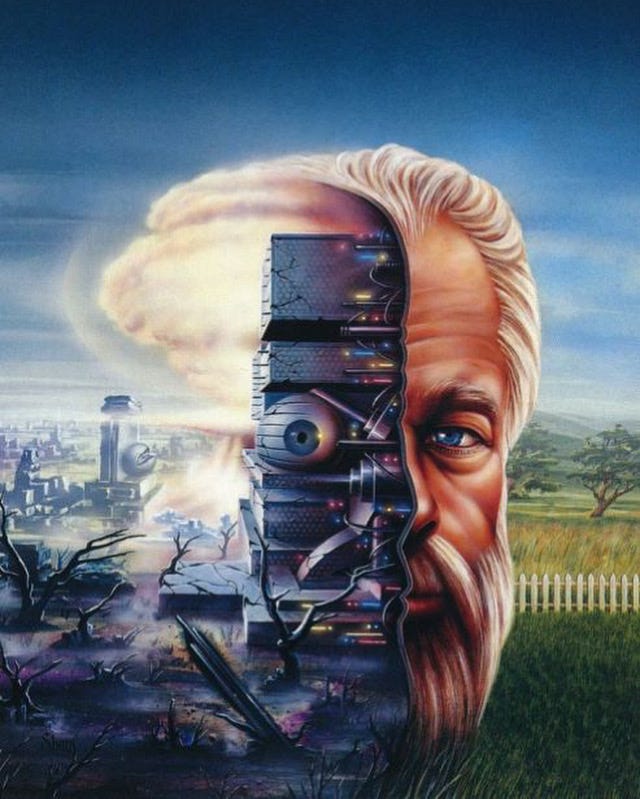
Ultimately, however, no matter how fun, cute, or engaging it all is - it’s all just junk. To perform taste as content, to view it, to share it, to save it, to circulate it is to participate in a system of unpaid labor. What feels like leisure, research, self-expression or cultural play is in practice - work.
Each act of circulation produces data. Each declaration of taste refines a profile, each experience trains an algorithm, extends a brand and most importantly - sustains a platform. The pleasure may feel real, but enjoyment does not negate extraction.
Performative Taste Content™ thrives because it recruits desire itself into the production process. It asks nothing more of the user than to be Themselves™, to express what They™ like, to narrate who They™ are. In return, platforms receive a continuous stream of high-resolution identity data and a steady supply of culturally prestigious content, generated for free…for Fun™.
If you can block out the bone-shaking hum of the data centres vibrating in the distance, this is the quiet efficiency of Their™ systems of control. No coercion is required. No persuasion is necessary. Participation feels voluntary, even pleasurable, while value is produced elsewhere.
What is “content” anyways? Can art exist, survive and purposefully resonate in the same container as a reaction video?
As an infographic?
As a selfie?
Can a Reel™ about a Roland™ Space Echo™ be art?
Probably not.
But I don’t know. These are the types of questions that make me feel both incredibly intelligent and absolutely stupid once I start to try and answer them.
I guess I’ll go cry in the mirror while I think about it.
I do know two things for certain though:
ALL THAT IS SOLID MELTS INTO CONTENT™.
and:
YOU ARE WHAT YOU FEED™

aaaaaaand doot doo da loot dooo….
Tarazan Dan on your radiadiooooooooo
(i repped 680 CFTR hard as a youth)